
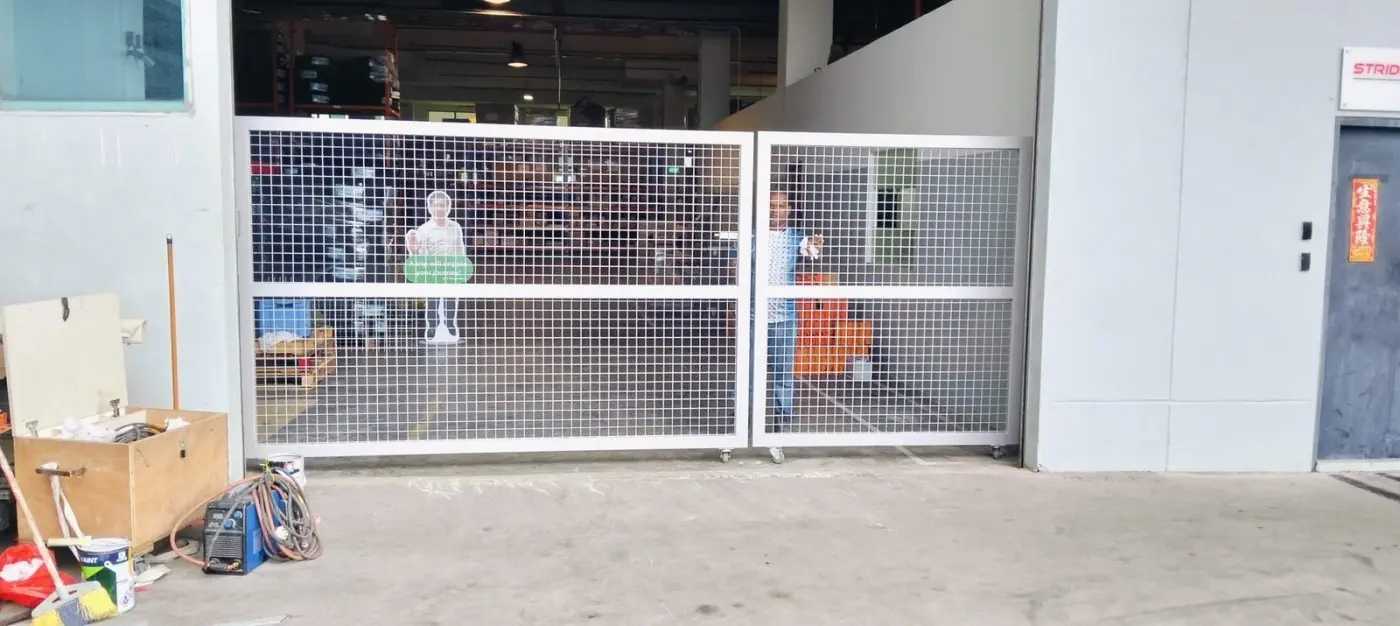
A metal gate is more than a property boundary — it is a daily-use security and circulation feature that has to survive Singapore's tropical exposure for 15-25 years. This post sets out the five gate styles we are most often asked to fabricate and install, and the practical points that drive the brief: material choice, finish, motorisation and code references that the consultant or qualified person should sign off where required.
1. Modern stainless-steel gates
Stainless steel — usually SS304 brushed for sheltered driveways and SS316 brushed for coastal sites — has become the default for contemporary landed homes that want a clean, low-maintenance look. The grade matters: SS304 is fine inland but tends to show "tea-staining" near the coast or above pool decks, where SS316's molybdenum content reduces pitting under chloride exposure. Mechanical polish (#4 satin) is the most-specified finish because it hides the inevitable handling marks and is easy to refresh.
2. Mild steel with powder coat or 2-pack paint
Mild-steel gates are the workhorse for landed-property side gates and condominium service yards. Cost is lower than stainless; design freedom is higher. Outdoor exposure should be addressed by either hot-dip galvanising plus topcoat, or zinc-rich primer plus a 2-pack polyurethane finish. Powder coat alone is acceptable for sheltered installations but degrades faster than 2-pack systems under direct sun.
3. Aluminium gates for coastal and lightweight applications
Aluminium 6063-T6 sections are increasingly specified for coastal residential properties and light commercial entrances. The weight saving reduces motor sizing for automatic operation and the natural oxide layer resists corrosion without coatings. Aluminium gates work less well where security is the primary driver — a determined intrusion will dent the panel — so they are usually paired with mesh infill or used as a secondary access gate.
4. Wrought-iron-style decorative gates
Decorative gates — vertical bars with hand-forged scrolls, finials and crowns — remain popular for traditional and heritage-style homes. The "wrought iron" label is mostly stylistic; the steel itself is usually mild steel or galvanised mild steel. Detailing should account for water capture in tubular sections (drainage holes) and avoid rust traps where decorative motifs meet structural members.
5. Automatic swing or sliding gates
Most new gates we install today are motorised. Motor selection depends on leaf weight, frequency of use and whether mains supply is available; reputable brands include FAAC, BFT, CAME and DEA, with the supplier specification confirmed for the project. Safety logic — obstacle detection, safety edges, photo-eye sensors — must be considered for any gate that operates over a public footpath or shared driveway. Compliance with applicable safety standards is the supplier's and installer's responsibility per project.
How we plan a gate project
- Site visit — measure post-to-post opening, ground levels, swing clearance and existing services.
- Material and motor recommendation — matched to the brief, exposure and frequency of use.
- Itemised quotation — including foundations, motor, accessories and finish.
- Shop drawings — for client approval before fabrication.
- Workshop fabrication, on-site installation, alignment and finishing.
- Hand-over — operating manual, supplier warranty card and a defect walk-through.
Cautions and items to confirm
- URA / management corporation rules on gate height and setback should be checked before fabrication.
- Automatic gate safety standards are the responsibility of the supplier and installer; confirm in writing.
- For a structural opening (e.g. a heavy commercial sliding gate over 5 m wide), structural endorsement by a Professional Engineer may be required by the relevant authority — confirm with the project consultant.
Related services
- See the full Metal Gates service page for scope, materials and process.
- For railings and balustrades, see Metal Railings.
- For fence and grille panel work, see Fencing & Grilles.